
Before looking at the Geographic Paran phenomenon on the North Coast of Scotland, a few words about practical matters interwoven with observations from my own experience in the area.
The NORTH COAST 500 became a recognised travel experience around the turn of the century. During the last 50 years the roads have evolved from largely single-track and a few ferries, into a mixture of 2 lane carriageway and sections of single-track.
The main road is the A9, Scotland’s longest. That’s how most road travellers arrive in the area. There are other options but none as efficient especially if you are tight for time.
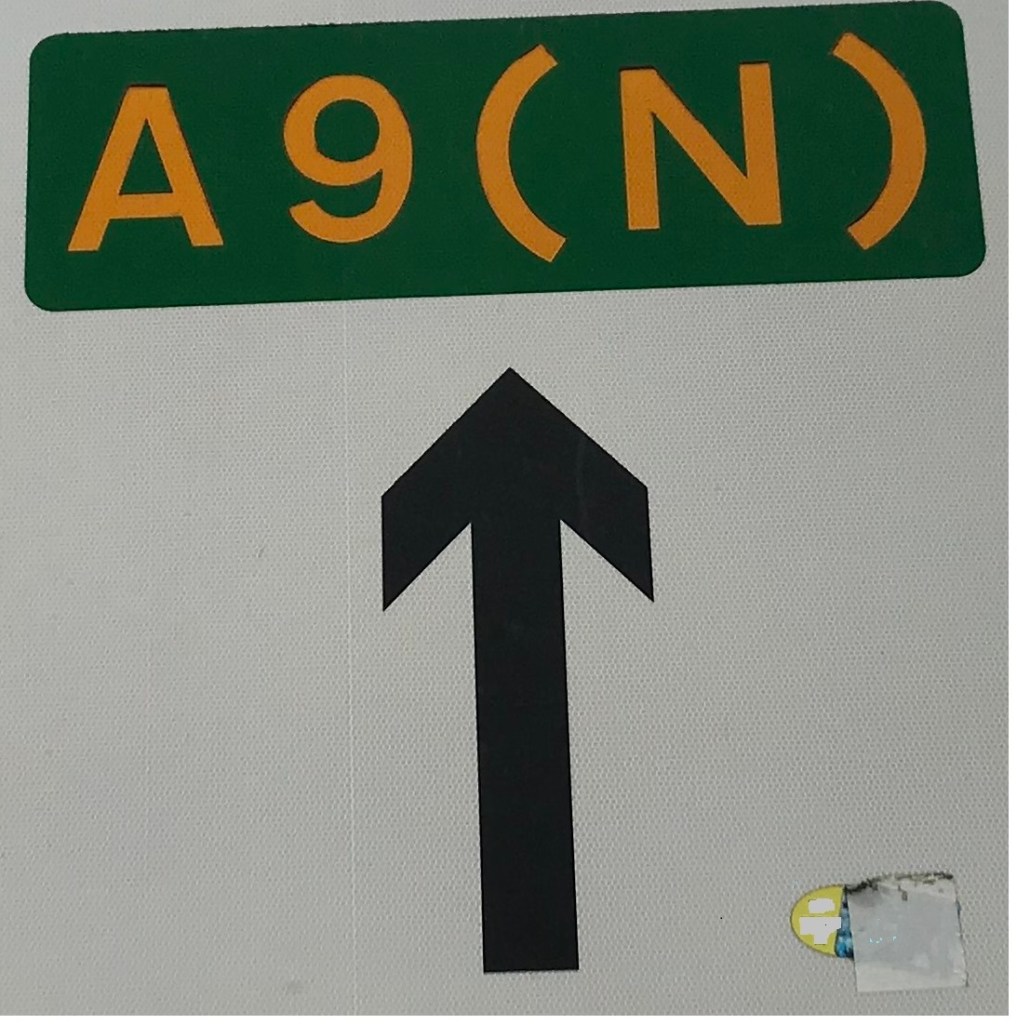
I first experienced the A9 in 1968 as a 7-year-old. My parents had just taken delivery of a brand new professionally converted VW Camper van. KFG195F was white and beige. Its maiden voyage was from our home in Fife to Ullapool, Wester Ross, a village on today’s NC500. A Journey of 200 miles.
My memories are of constant stops for roadworks. There was major reconstruction everywhere as the road was in the process of upgrade from single-track into 2-lane carriageway. We left early and when we arrived it was time for bed. I think Dad’s patience was severely tested that day. The van never returned to the Highlands. Ireland followed a few weeks later and during the next 3 years we visited Spain, Andorra, France, Germany, Austria, Switzerland, Italy, Netherlands, Belgium and Denmark. My recollection of these journeys is good enough to know, we never again experienced a day with as many delays as the journey to Ullapool! You can still see sections of the old road. Probably best view on the south approach to Slochd Summit 405m, 20 miles south of Inverness.
By the age of 7 I already had a great interest in transport. Driving began on farm roads at the age of twelve and still in my teens was driving 7.5 tonne trucks. BBC Scotland released an A9 documentary a few years ago. It featured a few characters with strong links to the road and interviewed them in their vehicles. There were a couple of policemen. Another was the longest serving driver with D Steven, the largest haulage contractor in Caithness and Sutherland, most northerly regions of mainland Britain. I can’t remember the year he said he had first driven the A9, but do remember that before then, I had driven close to its full length in the truck. The journey from Fife to Thurso taking 10 hours.
In the mid 80’s the area became a recreational choice. The burning question was, how light would it be at the summer solstice? For several years, into the 90’s, there were annual visits to Durness, the north-west corner of the NC500. The village is much busier today as one of the most popular overnight stops on the route.
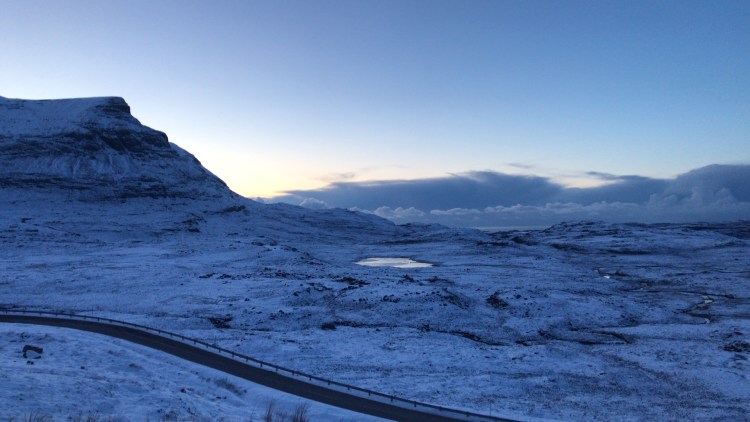
Quinaig on the NC500 between Ullapool and Durness.
Long before the title NC500 appeared I had driven most of it. There is a tiny section in the south west corner I’ve missed. Since the establishment of the NC500 as a major tourist route, guide books have tended to recommend an anti-clockwise direction. I always preferred clockwise. It offers better views of the Moray coast as you travel south from John O Groats to Inverness, 120 miles, mainly on the A9. This is the fastest section of the NC500. Travelling clockwise you enter the rugged landscape almost immediately. By the time you reach the north coast where the road is most challenging, you are better prepared.
Road quality varies greatly. The worst sections are in poor condition with uneven edges into soft ground that can end your journey instantly. It’s always a surprise how many people are willing to risk wrecking their polished heirlooms or any car for that matter. Low clearance vehicles will add another stress dimension. If you can afford a fancy sports car , a robust SUV will offer more peace of mind. Carrying your own full-size spare wheel is always advantageous. Nowadays it seems rental vehicles don’t even carry a space-saver.
A special mention should be made for cyclists. The NC500 is not a ‘cycle-route’. One of the best screwed-up faces I ever saw was by a Dutch woman when I suggested she do some cycling in the Highlands. Imagine taking a 2 week vacation during which time you are the subject of a constant flow of profanities, whether you hear them or not. If you are a genuine cyclist, then visit your Mecca across the North Sea. There are 1000’s of Kilometers of designated cycle-track , safest on earth, where the norm is for high standards of mutual courtesy.
If you are willing to accept missing a 25 mile section of the north coast between Tongue and Melvich, an extra 42 miles entirely on single-track road, will take you inland through the Heart of the Sutherland Flow Country and access to an abundance of wild parking places. Tongue – Altnaharra – Syre – Kinbrace – Melvich. A popular satellite navigation tool indicates 2 hours journey time. Even without stops it would be more accurate to allow yourself at least 3. It’s normal for AI/navigation systems, to under estimate journey times in the north of Scotland. If you use these tools, it’s prudent to add as much as 20%.
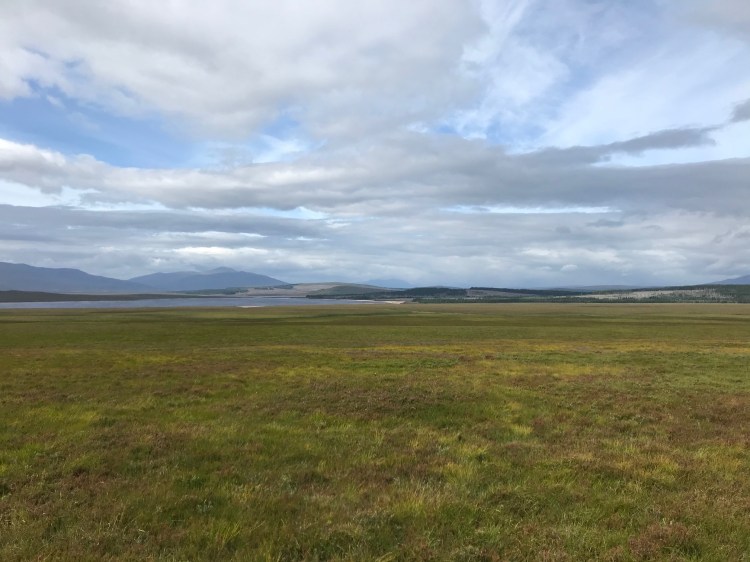
Heart of the Sutherland Flow Country between Syre and Kinbrace
There was a long gap until my next visit to Sutherland in 2017. A few more happened before the possibility arose in 2023, for a relocation to the Skerray peninsula, between the villages of Tongue and Bettyhill; probably the roughest and most dangerous section of the NC500, which you would avoid by following the suggested cross-country detour.
Most of the NC500 single-track road is in the north west sector between Laxford Bridge and Bettyhill. The tendency is always to drive too fast. Breakdowns and vehicle damage requiring recovery are a regular daily occurrence
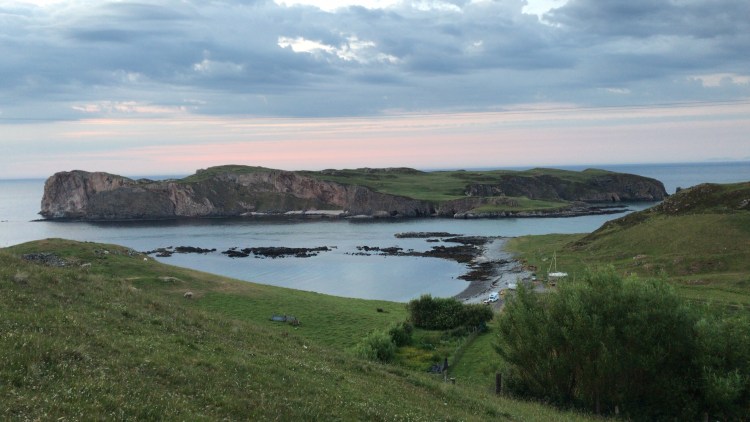
Neave Island, Skerray
Single-track driving etiquette degenerates into a madhouse during the summer season. That’s not to say the locals aren’t capable of thoughtless manoeuvres. You should always try to give way to climbing traffic. In other words, slow downhill.
Let vehicles pass. Any line of vehicles presents a large obstacle that doesn’t easily fit into all the passing places, causes chaos and delays everyone. Avoid convoys.
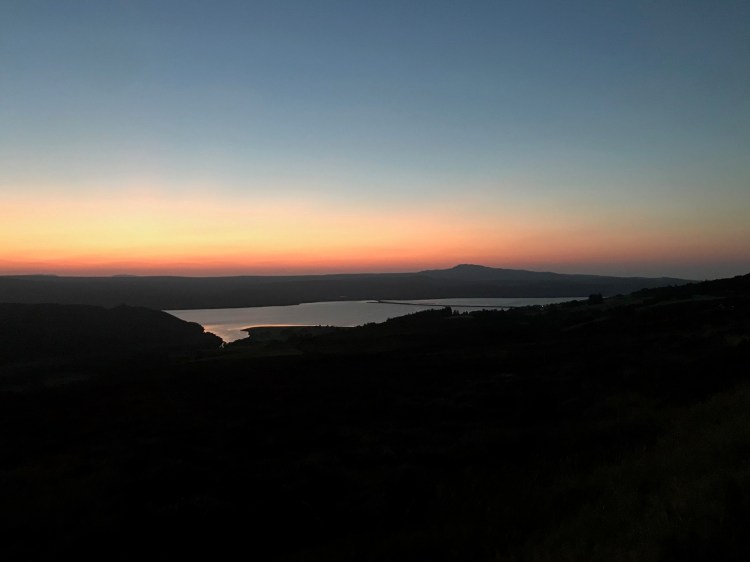
Kyle of Tongue and NC500 causeway, from a popular free parking place.
Perhaps the most contentious issue with the passing places is applying irrelevant lane discipline. If a loaded lumber truck is approaching it’s normal to pull in to the passing place whatever side of the road. This tends not to be the case otherwise. Rather than pull into ‘the opposite side’ and allow oncoming traffic to pass easily, it is normal practice to stop in the road making the oncoming vehicle decelerate, often brake and sometimes struggle to use the passing place. It simply doesn’t make any sense for two vehicles to break speed when it’s only necessary for one.
Yes, to drive well on the single-track is a greater effort than most roads, a lovely experience if you take your time and avoid being dragged into convoys. Enjoy the fact that you can pull over anywhere, a luxury you don’t find anywhere else on this island.
Tourists appear to travel mainly between 9am-5pm. Understandable for those using hotel accommodation. Otherwise, that time constraint is unnecessary. There is less traffic on the roads in the evenings and early morning. For 3 months, it’s never really dark. By 3am there is daylight. Frequently, the early hours of the morning are the best of the day.
Moving at 20mph, allows you to see much more. Stopping places are more plentiful than any other area of Britain. Free parking is abundant. Don’t be in a hurry. Have flexibility. It’s normal to experience some ambient weather during a visit here. Even in summer it’s also normal to experience some of the less enjoyable weather conditions, especially strong wind. A motorhome visit to the North Coast of Scotland allows us to discard the rigidity of daily life schedules in favour of following nature. Make hay while the sun shines rather than following the clock. Don’t sleep when the sun is shining. There is never a dull morning far away to sleep late if necessary.
Now, a thorny issue. Irresponsible dumping of garbage as we all know is a scourge over the entire planet. What does this tell us? It’s easy to become angry, with those, incapable, of properly managing the disposal of minimal domestic waste. It’s particularly noticeable around wild parking areas in the north of Scotland. Enjoying completion of simple tasks is fundamental for a happy life.
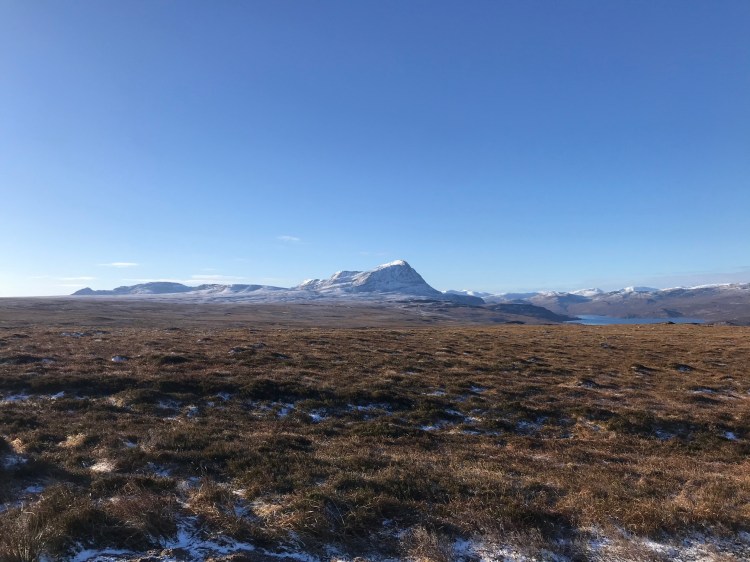
Ben Hope 922m from the NC500
The greatest gifts on a visit to the North Coast of Scotland are from nature. The air and light quality are better than most of Europe. It’s the driest place in Britain. The North Coast, more than anywhere else on the British Isles, has the lowest relative humidity.
You might be familiar with the notion of aura. This is our own dynamic energy field that fully functioning, extends some distance from our physical body. In crowded places the energy field is more easily diluted and distorted. This would explain, perhaps more than anything else, subconsciously our aura is crying out for space and tranquillity. This is confirmed by the popularity of remote low populated areas for travel.
From Strathy Point midway along the north coast, to Inverness is 105 miles by road. Inverness is the nearest settlement with a population exceeding 8000 inhabitants. 48,000 at the last census. The population density of Sutherland is less than 7 people per square mile. Lots of space! Even the Outer Hebrides is 3 times that number. Caithness is much busier at 41 per square mile. London is 15,000 per square mile, X2000 more disturbance than Sutherland.
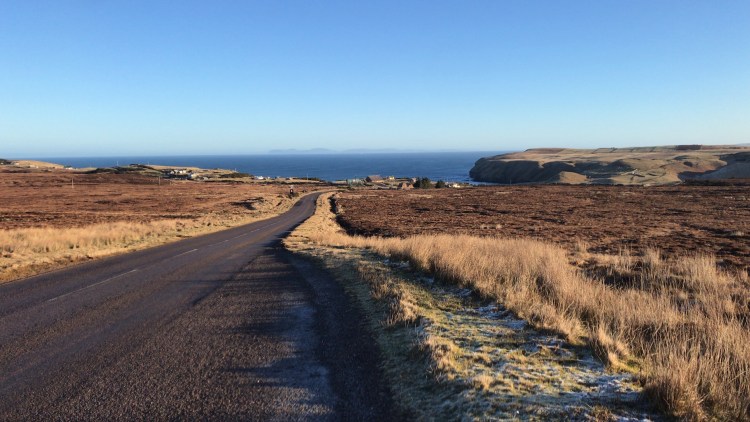
NC500 at Strathy facing NE, with Orkney in the background.
Perceiving scale is difficult. Numerical comparisons help. The best way is to come and feel it.
Which leads us neatly into Geographic Parans.
A Paran Map is always useful.
One of the best places to know your Parans is on the North Coast 500.
Have you noticed that the actual North Coast section of the NC500 is where you travel close to straight east or west for the only part of your journey. It’s also the longest period you will be in alignment with whatever PARAN(S) you have been blessed with on the North Coast.
Most people reach the North of Scotland by road. The majority travel north through Britain, often from mainland Europe.
During the journey north through the length of Britain it’s normal to experience several different Parans or energy fields.
This is an unusual experience that doesn’t normally occur in our daily lives.
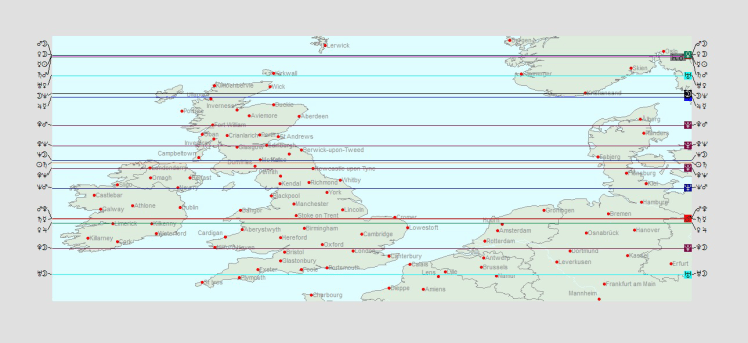
Parans, shown by coloured lines, are energy fields created by planets crossing paths on the day you were born. These are aligned at specific latitudes around the entire planet.
Some combinations are much more enjoyable than others.
If you’re looking for fun, Saturn Parans are best avoided.
Venus Parans, are among the most pleasant with a tendency to make us kinder and more gentle.
Most Mercury Parans favour health.
Finding a place that suits everyone in a couple or a group is not always easy.
Some Paran combinations are rich and complex when they overlap.
Discovering your Paran(s) for the North Coast will greatly improve your visit.
You can ignore Parans completely, and offer others similar advice.
Alternatively, an awareness of what is likely in store for you on your journey along the North coast, will prevent unpleasant surprises.
Experiencing an unfamiliar Paran configuration, probably for the first time, can range from quite disorienting to magical revelation. It’s enlightening to realise that unfamiliar impulses are the result of powerful cosmic forces. Knowing why one of you is feeling great, and the other not, can provide a great release of tension.
Your Paran Map is a tool that can greatly improve your journey to and from the NC500 area by enabling you to tarry on your most favourable alignments.
There are almost 9 degrees of latitude on the British mainland. We hope, but can’t guarantee, you’ll have an inspiring Paran somewhere in that range. We all have a few places that stand out.
Thank you for taking time to read about North Coast 500 Paran Maps.
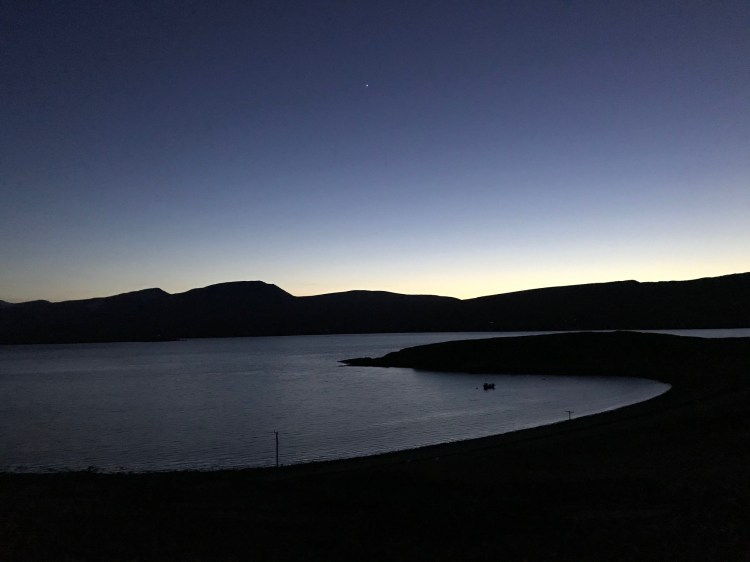
Venus over Loch Eriboll
To see your own unique Paran locations, GET PARAN MAPS
Call or SMS Alistair on 07552 882004 for immediate attention.
© PISPASCANA.COM 2026

